Saturday, February 11, 2023

Fishing Inline Spinners for Late Winter Bass

Fishing inline spinners is a popular and effective technique for catching late winter bass. Inline spinners are versatile lures that mimic the movement of a fleeing baitfish and trigger a predatory response from bass. They are available in various shapes, colors, and sizes, and are a go-to option for many anglers looking to target bass in late winter.
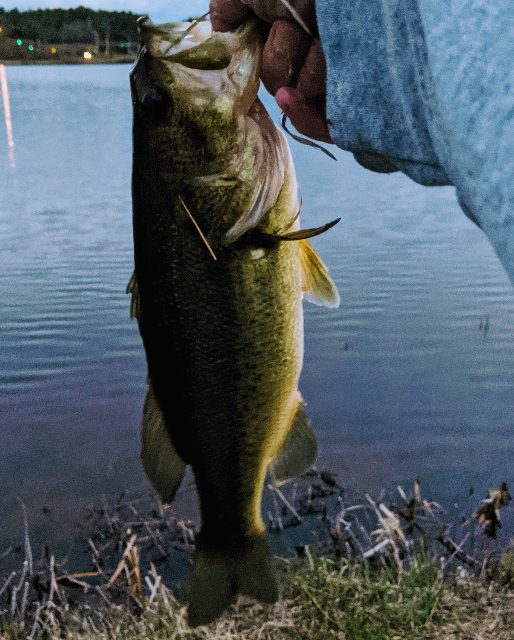
Late winter is a crucial time for bass, as they are starting to feed as they prepare for the spawning season. During this cold water period, bass tend to be sluggish and less active, making them a little harder to catch. However, fishing inline spinners can still be productive, as the subtle spinning action and vibration of the lure can attract bass when other baits fail.

A quality rod and reel combo is key to effectively fishing inline spinners. To start, you will need a 6.5' to 7' medium-light to medium power, fast action spinning rod and matching reel to balance the outfit. The reel should be spooled with 8- to 10-pound test braided main line, as it provides good sensitivity and casting distance. A fluorocarbon leader of 4- to 8-pound test is recommended, since it provides low visibility and abrasion resistance.

Inline spinners come in a variety of sizes, colors, and blade styles. For late winter bass, select inline spinners that mimic small baitfish or crawfish. Silver or gold blades are good starting choices for clear water, while copper, chartreuse or painted blades are better for stained or murky water. A size 1/8 to 3/8 oz inline spinner is a good starting point, as it allows you to fish at a variety of depths and retrieve speeds.

Friday, February 10, 2023

Yo-Yoing Lipless Crankbaits for Spring Smallies

Seems Rapala has been busy in their labs again, this time creating their third generation of lipless crankbaits, the Rippin’ Rap.


According to Doug Stange of InFishermanTV, this new design has a different profile than its predecessors (Rattlin’ Rap & Clankin’ Rap) as well as different sound, vibration and fall pattern.

In this instructional video, Doug uses a Yo-Yo type retrieve to connect with quality early spring smallmouth bass and explains the difference between the different Rapala lipless crankbaits…


From the look of the Ripplin’s Rap, it seems like Rapala might be mimicking Strike King’s Red Eye Shad…

What do you think?

P.S.

The yo-yo retrieve is a favorite of mine for bass in the spring and late fall using lipless cranks from several different manufacturers, just sayin’ ðŸ˜‰

Thursday, February 9, 2023

Bass Fishing Using Curly Tail Grubs

Curly tail grubs are soft plastic lures that mimic the movement and appearance of small prey, such as worms and insects. They are commonly used for bass fishing because they are versatile, affordable, and effective at attracting fish. 


Bass are attracted to the movement and action of the grub, which can be rigged on a jig head or on a variety of different rigs. Grubs can be fished on the bottom, vertically pitched, or cast and retrieved, plus they come in a variety of colors and sizes, making them an essential lure for bass fishing, especially under tough conditions.

The size and color of curly tail grubs used for bass fishing can vary based on the fishing conditions, water clarity, and the preference of the angler. However, some popular grub sizes for bass fishing range from 3 to 6 inches long, with 4 or 5 inches being the most common sizes. 

As for colors, popular options include watermelon, green pumpkin, white, black, chartreuse, and smoke. It's also a good idea to match the color of the grub to the hatch of the local forage or to use a color that contrasts with the water clarity. In murky water, brighter colors such as chartreuse or hot pink may be more visible to fish, while in clear water natural colors like watermelon or green pumpkin may be more effective.


Curly Tail Grub Rigging Methods

There are several ways to rig a 5" curly tail grub for bass fishing:

Open jig head rig: This is one of the most popular rigging methods for curly tail grubs. It involves threading the grub onto a jig head hook, with the hook point exposed through the grub's head. This allows the grub to swim naturally and triggering bass into striking.

Weedless jig head rig: This is one of my favorite rigging methods for curly tail grubs. It involves threading the grub onto a weedless jighead with an EWG offset hook and the hook point Tex-posed through the grub's body then the hook point skin hooked to make it snag resistant. This allows the grub to still swim naturally, work in and around different types of cover while still enticing bass to strike.

Wednesday, February 8, 2023

Quick Tip for Using EWG Worm Hooks with Soft Stickbaits

Ever since I started fishing soft stickbaits over 20 years ago, it became one of my go-to baits from the first trip after ice out until the last before ice in. Though I haven't formally tracked the numbers, the soft stickbait likely accounts for more than half the bass I catch each season. It’s definitely a bass catcher.


Most of the time, I use a 5" (some brands produce slightly longer versions) bait though I also use 4 and 6 inch lengths under certain conditions.

Rigging Soft Stickbaits with EWG-style Hooks

When fishing a soft stickbait, I often switch between a Texas and wacky rig depending on the type of cover being fished and the mood of the bass. A few trips each season, I have several rods rigged with the baits I use for an outing; one rod with a 5” soft stickbait Texas rigged on a 3/0 EWG hook and a second stickbait wacky rigged on a #1 or #1/0 wacky style hook.


Most of the time however, I fish from the bank or a kayak and only carry a couple of rods with me. During those trips, I use a 3/0 EWG hook for both rigs when regularly switching back and forth between the Texas and wacky rigs. That way I don’t spend extra time retying baits during short trips and when I have limited tackle available due to space concerns.


This approach works well when fishing cover like sparse weed patches, rocks/boulders, open docks or logs/stumps without lots of branches. When fishing heavier cover however, I’ll re-rig when switching since the wacky-EWG rig is far from snag proof.

Is this the best system when wacky rigging soft stickbaits?

Perhaps not but when time and gear are short and I want to quickly switch between a Texas and wacky rig, it works for me! :)

Fishing the Whopper Plopper for Spring Bass

Spring is a great time for fishing and the Whopper Plopper can be a great lure to use as both bass and prey move into the shallows to feed. 

Here are several tips for using the Whopper Plopper and similar plopper-style baits for spring bass fishing:

Choose the right size plopper and gear: It’s often important to choose the right size Whopper Plopper, when fishing for spring bass. The size of the lure should match the size of the bass forage and gear being used during your spring outing. The #60 size Whopper Plopper is usually best fished with light spinning tackle and when bass are eating small forage; the #75 & #90 sizes fished with medium power casting or spinning gear and when bass are targeting mid-sized forage; and the #110 & #130 sizes should be fished on M/H to H power casting gear when bass are on larger forage or you're targeting larger bass. As with all topwater baits, it's usually best to use either monofilament or braided line when fishing plopper-style baits.