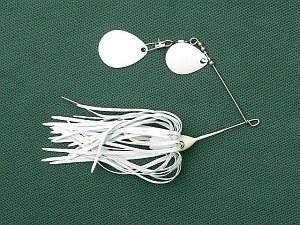
Spinnerbaits are a staple in any angler's arsenal, offering versatility and effectiveness in a variety of fishing situations. However, within the realm of spinnerbaits, there are choices to be made, particularly regarding the wire arms that hold the spinner blade.
Light wire arms offer a unique set of advantages and disadvantages compared to their heavier counterparts.
Main Advantage:
Increased Vibration: The lighter wire vibrates more readily with the slightest movement, creating a subtle vibration that can attract fish, especially in murky water or low-light conditions.
Main Disadvantage:
Bending and Breakage: The inherent weakness of light wire arms makes them more susceptible to bending or even breaking when encountering large bass and/ornumbers of bass, especially spinnerbaits with r-bend connection points.
Since those anglers who prefer using light wire spinnerbaits also want to catch as many bass on a bait as possible, a cool hack has been developed to help reduce bending and breakage.
Take a few minutes and watch as bass pro Justin Lucas demonstrates how to the hack works...
Pretty cool hack, huh!
If you don't have the right size split ring handy however, a small piece of heat shrink tubing or vinyl tubing (the type used for spinnerbait trailer hook keepers) can work in a pinch!
Waking or bulging a spinnerbait is a presentation used to retrieve a spinnerbait just below the surface of the water. This retrieve creates a wake or bulge often attracting bass since it mimics fleeing baitfish. This technique is most effective when bass are feeding actively and are close to the surface, particularly in shallow water.
To wake or bulge a spinnerbait, you will need to use a rod with a medium-heavy power and fast action along with a reel with a high gear ratio (> 6:1). You will also need to use an appropriately balanced spinnerbait with a mag willow leaf, Indiana or Colorado blade, as these blades will create the most disturbance at the surface of the water.
Here are the steps on how to wake or bulge a spinnerbait:
Cast your spinnerbait to your target area.
Reel your spinnerbait back at a fairly fast speed.
Pay attention to the action of the spinnerbait. You want the blade to be creating a wake or bulge on the surface of the water.
If the spinnerbait is not creating a wake or bulge, adjust your retrieve speed.
If you are not getting any bites, try changing the size or color of your spinnerbait or using different blades.
The bulging spinnerbait retrieve is one I have used for many years after reading an article by bass fishing celebrity Jimmy Houston on his favorite spinnerbait presentations. Take a few minutes and watch as he gives his thoughts on when, where and why to use the bulging and bubbling retrieves when targeting bass with a spinnerbait...
As an avid bass fisherman, I'm always looking for lures that can handle a variety of situations and catch fish under diverse conditions. That's why the spinnerbait is one of my absolute favorite baits to tie on when chasing both largemouth and smallmouth bass. The versatility of a spinnerbait makes it one of the most valuable tools that should be in all bass angler's tackle box.
A spinnerbait is essentially a safety-pin shaped wire frame with a lead head, dressed hook, and spinning blade or blades. This simple but effective bait can be retrieved steadily, fished with a stop and go retrieve, ripped through vegetation, slow rolled, fluttered or bounced along the bottom. And it will catch bass relating to cover, suspended in open water, cruising the shallows, or holding tight to cover/structure.
One of the best things about spinnerbaits is that they can be fished at just about any depth. Want to burn a spinnerbait high in the water column? Go for it. Need to bump a bait along rocky bottom? The spinnerbait has you covered. Even working a spinnerbait through thick grass or wood is no problem with the right blade configuration and retrieve.
Of course, choosing the right spinnerbait for the job is important for success. Colorado, Indiana and willow leaf blades are the most common blade types and each one have different flash/vibration profiles when being retrieved. Double willow leaf spinnerbaits have an incredibly fast thumping motion with lots of flash that mimics shad, while big Colorado blades produce maximum vibration. And spinnerbaits can be purchased in a rainbow of colors to match any water clarity conditions or selected to "match the hatch" when bass a being picky and feeding on certain types of forage.
Light wire models are perfect for clear water finesse situations, while heavy wire 1oz+ spinnerbaits let you bulldoze through the nastiest cover as well as probe the depths for bass relating to structure. I make sure to carry a variety of blade configurations, wire frame types (standard, compact, finesse, etc.) and weights in my tackle box to adapt to changing conditions on the water.
Though often thought of as a soft plastics expert, bass pro Larry Nixon has leaned on the effectiveness of the spinnerbait to hone his success while out on tour. Take a few moments and listen as he shares his views on how the versatility of the spinnerbait has helped him win some of the biggest events of his career...
The next time you hit the water for some heart-pounding topwater blows or find the bass tucked up in vegetation, tie on a spinnerbait. The ability to quickly change things up by modifying your retrieve and spinnerbait type is the key to maximizing your efficiency while out on the water. This do-it-all bass catcher should be a go-to in every angler's tool kit!
Spinnerbaits are a versatile bait that can be effective in a variety of conditions, but they can be especially deadly during the summer months. When bass are actively feeding in the summer, a spinnerbait can be a great way to get their attention and trigger aggressive strikes from big bass.
Here are several tips on how to fish spinnerbaits for summer bass:
Use the right size and color. The size and color of your spinnerbait will depend on the water clarity and the type of cover you're fishing. In clear water, use a smaller bait with a bright nickel or white, willow-leaf shaped blade. In dirty water, use a larger bait with a copper, gold or chartreuse colored, Colorado or Indiana style blade. Always try to match the bait to the baitfish that the bass are feeding on when possible.
Vary your retrieve. The best way to fish a spinnerbait is to vary your retrieve. You can retrieve it slowly, quickly, or with a combination of both. You can also impart occasional twitches or pauses to imitate struggling baitfish. Experiment until you find a retrieve that's triggering strikes each time you hit the water.
Fish it around cover. Spinnerbaits are great for fishing around cover, such as rocks, weeds, docks and timber. Bass will often use the cover as hiding spots and ambush baitfish that swim by. When you're fishing around cover, make sure to work your spinnerbait close to it making contact as often as possible.
Burn it when working shallow flats. In the summer, bass will often move over shallow flats to feed, especially in low light conditions. This is a great time to burn a spinnerbait over and around cover found in the shallows to trigger staging bass waiting to ambush schools of baitfish.
Take a few moments and watch this short video from the folks at Sportsman’s Outfitters discussing three specific patterns where spinnerbaits excel in catching summertime bass:
Thinking back to the days when I first started to focus my fishing time chasing bass, the spinnerbait was one of the baits I relied on to connect with our finny friends.
Great Spinnerbait Bass!
Back in those days (think the 70s Show), spinnerbaits came in a variety of different styles, colors, sizes and three main types of blades: Colorado (round), Indiana (long tear drop) and willow leaf providing a multitude of options for different conditions just as they do today. Add in the fact they are highly snag resistant and the spinnerbait was and still is a fantastic choice for probing the different types of cover bass hang around.
Since my early spinnerbait fishing days predated this thing called the Internet, my spinnerbait education was limited to magazine articles and watching the few TV fishing shows that aired at that time.
Jimmy Houston was one of the early bass pros that was considered to be a spinnerbait guru. Jimmy frequently shared his spinnebrait knowledge via whatever media outlets he could at the time. He was and still is a great source of spinnerbait, as well as shallow water bass fishing knowledge in general and significantly influenced my approach to shallow water bassin' throughout the years.
He still freely shares that knowledge today via various articles, TV shows and on social media sites like his YouTube channels.
So take a couple minutes and watch Jimmy's video describing the importance of spinnerbait vibration and flash in attracting bass and triggering more strikes. You'll be glad you did!
Spinnerbaits are one of the most versatile and effective lures you can use for bass fishing. They can be fished in a variety of water clarities ranging from clear to muddy and can be used to target bass in shallow water to deep water.
One of the most important decisions you'll make when fishing a spinnerbait is choosing the right blade combination. There are two main types of blades used on spinnerbaits: Colorado blades and willow leaf blades.
Colorado blades are wider and have a deeper cup than willow leaf blades. They produce more vibration and thump, which makes them ideal for fishing in cold, dirty water when bass tend to be sluggish. Willow leaf blades are narrower and have a shallower cup. They produce less vibration but a greater amount of flash making them more effective in clear water and when water temps are higher making the bass are more active.
MLF bass pro Edwin Evers often relies on choosing the right spinnerbait when chasing spring bass on the Bass Pro Tour. Take a few moments and watch as EE explains his system for selecting the right spinnerbait depending on the conditions he encounters during each spring event:
One week after catching the 7-pound plus largemouth, I was back on the water armed with the same quarter ounce white Bush-hog bait. This week, both the purpose and weather for this fishing trip than was the case for the previous week’s trip (see previous post for more info).
Last Club Bass Tourney – November, 1976
When I arrived at the ramp early on November 7th (1976), I met Harry and the rest of the bass club members who were fishing the last tournament of the season. Harry was the person who introduced me to organized bass fishing tournaments and the club earlier that year.
Now this wasn’t one of those big-money deals you see on the ESPN or the cable sports channels, this was a small club event to qualify a team that would represent the club at the state fish-offs during the Summer of 1977. As a matter of fact, there was no money involved in the tournament at all, just points to help earn a place on the team.
Hi-Tech (?) Bass Rigs!
As we loaded the equipment into the boat (a 14-foot, v-hull aluminum boat altered to serve the needs of most fisherman in the 70s (seats, livewell, electric trolling motor, depth finder, etc.), we both noticed the increasing cloud cover and talk of snow by the afternoon weigh-in.
Is it true that one particular fishing lure (not just a type or brand) hold a special place in the memory of days gone by?
Absolutely …
As I think back to the days when my bass fishing fever arose from a spark, I fondly remember using one particular spinnerbait like it was yesterday …
The bait, an all white, quarter ounce lure with tandem white Colorado blades called a “Bush-hog” spinnerbait. It’s actually somewhat funny because if you consider my first choice in spinnerbaits today, the other Bush-hog spinnerbaits in my collection have been relegated to “B-Team” status.
Thinking back to the Fall of 1976 (OK, I just dated myself!), however, one particular all white, ¼ oz. Bush-hog definitely experienced its “Glory Days” over a short week long period.
As I started to write this review of a favorite bass fishing lure, the Vibra-Bug spinnerbait by Rocky Ledge Tackle of Pittsfield, NH, I suddenly realized I seem to be fixated on spinnerbaits. The reason is simple, spinnerbaits are great bass fishing lures that can be fished at almost any depth and come in a variety of styles to compliment different tastes or fishing conditions.
Better yet, this is still northern New England’s secret bass lure and it even worked when I lived in the Midwest!
Earliest Overhead Arm Spinnerbait?
Now spinnerbaits are definitely not a newcomer on the bass lure scene. One of the first spinnerbaits introduced to the bass fishing public was the Shannon Twin Spin manufactured by the W. J. Jamison Co. in 1917. This specialty bass lure was virtually weedless with the twin overhead wireless shafts each holding a small Indiana-style spinner extending from the weighted head with a bucktail skirt. The lure held it’s own through the 1970s and you can find them for sale on E-Bay occasionally today.
One of the most versatile but often misused or neglected bass lures around is the trusty spinnerbait. Originally developed in the early part of the 20th century (Shannon Twin Spin for instance), the spinnerbait has seen it’s popularity rise and fall continually since its inception.
Why are spinnerbaits so versatile?
The weedless nature of the bait plus variety of possible configurations such as:
Sizes ranging from 1/8 to > 1 oz
Single, double and more spinner arms
Long or short arms
A multitude of possible color combinations (heads, skirts, blades & even trailers)
Several different blade types (Colorado, Indiana, Willow, Turtle/Mag Willow, Presto, etc.)
Multiple blade combinations both by type and number of blades
The possibilities are almost endless and at times mind-numbing…
Even though different anglers may have their own preference regarding the make-up of their spinnerbait arsenal, truth be told it doesn’t have to be overly complicated.
Recently, Booyah Baits developed their new Covert Series spinnerbaits in conjunction with bass pro Jason Christie to specifications Christie and his family has used for decades. Not only does the bait incorporate the overall design features (sizes, wire frame size, balance & components), they also created the baits their preferred color combos (heads, blades & skirts) for any water conditions encountered. To help in bait selection, Booyah developed an interactive graphic that identifies the best spinnerbait for different water temperature and clarity conditions. Click on the image below to access the graphic:
Even though the graphic identifies the preferred bait from Booyah’s Covert series line, since it IDs the “best” bait sizes, blade combos and skirt colors for temp and clarity conditions, you may be able to find a similar bait from your favorite spinnerbait company.
Of course there’s always the option of purchasing the components and building your own specialized spinnerbait for water conditions that you regularly fish.
Ask 10 bass fisherman how they feel about the use of trailers on spinnerbaits and you're likely to get almost as many answers.
After reading an article by Kevin VanDam recently discussing his approach to the use of spinnerbait trailers, I was surprised to find his views on using spinnerbait trailers were much like mine.
Generally speaking when fishing during the warmer periods of the year in either clear or slightly stained water neither KVD nor myself use trailers on spinnerbaits. When encountering conditions where the water is significantly colder (during the late fall, throughout the winter or early spring) or when the water is dirty we both agree it's time to break-out the plastic and add a trailer to our spinnerbaits.
Many bass anglers shy away from using spinnerbaits when fishing clear water lakes and rivers. Part of the reason is that we are taught to use baits resembling natural forage. Just take a quick look in any spinnerbait and it is plain to see it has little resemblance to any bass forage.
Even when selecting baits with color patterns mimicking different types of bait, spinnerbaits may look similar in color but lack the size and shape of the actual forage.
Nonetheless spinnerbaits can be highly effective when finished in clear water systems under the right conditions.
Best Conditions to Use Spinnerbaits in Clear Water
Though you can use a spinnerbait any time in clear water, the best condition to use spinnerbaits is one light penetration is reduced.
The best times to find these conditions include:
* low-light to bright light transition periods in the mornings and evenings; * cloudy to partly cloudy days; * sunny days when a good breeze creates chop on the water; and * anytime from dust to dawn.
Using a spinnerbait in a color pattern mimicking natural forage when these conditions exist can lead to great days of fish catching not just casting and reeling.
Color Patterns That Work
As mentioned above it is often best to use spinnerbaits in color schemes resembling the major types of bass forage present in the clear water lake or river you’re fishing. Typically these color schemes mimic baitfish such as shad, herring, alewives, shiners, chubs, bluegills or perch.
Some of the more familiar color schemes include:
* light baitfish patterns with nickel blades (different variations mimicking shad, alewives, shiners) ; * golden shiner pattern with gold blades; * yellow perch pattern with brass or gold blades; * green and white pattern with brass blades (mimics many chubs) ; * peanut butter and jelly pattern with gold blades (mimics bluegills); * crawdad pattern with copper blades; * white pattern with white blades; * bright chartreuse pattern with chartreuse blades (deadly on northern smallmouths); and * black spinnerbait with black blade for night fishing.
The color schemes selected obviously depends on the types of baitfish present in the waters you fish. The forage base varies according to the area in which you live. In the northeastern US, common baitfish include alewives, golden shiners and yellow perch; chubs. On the other hand, perch and shiners are common in the upper Midwest where shad, herring, shiners and bluegills are often more prevalent down South.
It is always best to check with your local fisheries agency and determine the prevalent forage base in your local lakes and rivers to make sure you select the best color patterns. Remember to verify the types of shad, shiners and chubs present since many spinnerbait manufacturers produce color schemes resembling specific baitfish.
The best retrieves for clear water environs depend on the season or time of day being fished. During the daylight period of the warmer months (late spring through early fall) faster retrieves (waking, bump the cover and stop/go) tend to work best. Use slow rolling and dead dragging retrieves during the cooler months as well as at night during the summer for increased success during those times.
Here’s a little more insight from pro bass angler Marty Stone on fishing spinnerbaits in clear water especially in the fall…
Now you are ready to visit your preferred tackle dealer; stock up with the right color schemes for your local clear water lakes and catch more quality bass than ever before.
Thinking back to the days when I saw my first spinnerbait, I remember a lure with blades just like an in-line spinner but configured in a way to make it weedless.
My first reaction?
What an odd looking contraption…
I definitely had my doubts it would catch anything much less bass. After a little more research, I finally broke down, bought a couple and even caught a few bass on one my first time trying it. I was hooked for life
Initially I saw the spinnerbait as a lure that could be fished like an in-line spinner with a basic cast and retrieve approach. Little did I realize how much more versatile any spinner could be when something changing as small as the retrieve style.
Over the years I learned a number of specialized retrieves for spinnerbaits making them even more effective than they were when I first starting using them.
One thing to remember when fishing a spinnerbait, this type of lure is the reaction bait designed to trigger bass into striking rather than mimicking actual forage. Imparting erratic motions during the retrieve is often just what the doctor ordered helping trigger those reaction strikes on a consistent basis!
An Introduction to Several Specialized Spinnerbait Retrieves
Chuck & Wind
The first time most of us heard the term “chuck and wind” was probably from watching bass fishing celebrity Jimmy Houston on TV. Jimmy made this spinnerbait retrieve famous when using it while fishing and winning several national tournaments decades ago.
Though chuck and wind sounds like a slow motion cast and reel approach, the retrieve is fast enough to keep the bait in sight just below the surface. This allows the angler to see the bait, watch for following fish and cover a lot of water quickly. Most anglers also either twitch the rod during retrieve or tick cover changing the lures movement helping trigger more strikes.
Bump the Stump (Cover)
Though many bass fisherman refer to this next retrieve as “bump the stump”, in reality it should be referred to as bump the cover. This retrieve is used where bass holding cover such as stumps, brush lines, weeds, rocks or docks dominates the area being fished. The cast is made beyond the cover to allow the angler to direct the spinnerbait into as many pieces of cover causing numerous erratic movements therefore triggering reaction bites. The “bump the cover” retrieve is probably one of the most effective retrieves used by bass anglers to trigger reaction strikes.
Waking the Bait
Another spinnerbait retrieve dating back to the early days of professional bass tournaments is called “waking the bait”. Just like the chuck and wind method, the spinnerbait is reeled with a fast retrieve so the blades create a bulge across the water’s surface mimicking escaping forage. Usually the retrieve speed is kept just fast enough to create the wake while not allowing blades do not break the water’s surface. If the retrieve suddenly stops working, try allowing the blade to break the surface which can sometimes help trigger additional strikes. This is another great retrieve to use when searching for bass since it allows the angler to cover a lot of water quickly.
Yo-Yo Vertical Edges
Several times each season all bass anglers encounter types of cover forming vertical edges extending from, at or near the surface all the way to the bottom. When bass are active and cruising along the edge, the any of the retrieves mentioned above may work when casting parallel to the edge. On days when bass are less aggressive, however another retrieve can help entice finicky fish into eating your spinnerbait.
Remember the yo-yos we all played with as kids?
This approach uses the same motion as you impart when using a yo-yo. A long cast is made either parallel with or perpendicular to the vertical cover. Initially the spinnerbait is allowed to flutter to the bottom or desired intermediate depth on a slack line. The bait is then quickly lifted towards the surface using both the rod while picking up line with the reel. As the bait gets close to the surface is then allowed to flutter back down towards the bottom before being lifted again towards the surface in a yo-yo retrieve style. The height of the lift-drop (yo-yo) retrieve can be varied to a specific depth interval depending on how the bass are positioned along the vertical cover.
Slow Rolling
A skillful bass angler, equipped with the right tackle and knowledge can often make negative to neutral fish strike with the right presentation. This is often accomplished by presenting a slow, thumping spinnerbait through cover, right into the strike zone of these sulking bass. The retrieve used to trigger neutral bass into striking is called “slow rolling a spinnerbait”.
This retrieve is started by making long casts across structure being fished letting the bait flutter towards subsurface cover. Once contact is made with the cover, the angler starts a slow, steady retrieve keeping the bait in contact with the cover, twitching occasionally to impart an erratic motion. It sometimes pays to experiment with the retrieve so try either a yo-yo or stop/go variation while slow rolling depending on the mood of the bass.
Another variation of this retrieve is to let the spinnerbait flutter all the way to the bottom. Next the spinnerbait is retrieved using a dragging retrieve by moving the spinnerbait with the rod and reeling in slack as you would with a jig or Texas-rigged worm. This variation is sometimes called “dead dragging a spinnerbait”.
There are a number of different retrieves to be employed helping the bass angler to tailor his or her presentation to the mood of the bass as well as the conditions being fished. As a matter of fact, never be afraid to use a little of your own imagination in developing unique retrieves.
Ultimately, these variations will put even more weapons into your spinnerbait fishing arsenal.
There's little doubt that spinnerbait skirt and blade color can be important in certain situations such as when fishing clear water; when chasing smallmouths or when bass are chasing specific types of bait.
But what about the head color of a spinnerbait; is it important as well?
According to the folks at Booyah, it absolutely can be especially when fishing different water clarity as discussed in this Booyah video production...
Head color, skirt color, blade shape, blade size and blade color are all spinnerbait component variations most anglers know and understand.
Did you know the spinnerbait head design along with wire frame design and wire thickness are also components that impact the way spinnerbaits fish in different situations?
Watch and listen to bass pro Patrick Walters as he provides his insight into how to choose the right spinnerbait for the different on the water conditions...
The spinnerbait is likely one of the first baits budding bass anglers throw when honing their catching skills.
We are all familiar with the single and double willow, Colorado and Indiana blade variations of this popular bass catching bait but did you know there are versions with even more blades or blade types?
Take a moment and watch as SK pro Greg Hackney explains his thoughts on spinnerbait fishing with special emphasis on some of the less popular blade variations in the following video...
Back in the days when I lived in the western US fishing reservoirs with good populations of shad, my buddies and I developed a finesse spinnerbait with presto type blades to throw when bass were chasing schooled 2 and 3 inch fry.
They worked great during the late summer and early fall!
You now what they say...
Necessity is the mother of invention and sometimes unique bait tweaks produce when the standard offerings won't!
The first time I saw a spinnerbait (a McCollum's Bush Hog), I thought it was one of the strangest baits I had ever seen. After a little research however, I bought a few and it quickly became my go to lure during my early bassin' days.
After years of research and experimentation, I learned many of the details of different spinnerbait components and construction that have helped make it one of the more versatile baits in the box.
I only wish one of the early spinnerbait experts provided a synopsis of that info so my learning processed was quicker.
It just so happens bass pro Jason Christie has done just that creating a fantastic video breaking down all aspects of the spinnerbait including:
Heads & frame
Weights
Blades
Skirts
Colors and
Trailers
Take a few moments and listen to his insight to hasten your spinnerbait knowledge!


.jpg)